메인 콘텐츠로 건너뛰기
Colab에서 열기 Instructor는 LLM에서 JSON과 같은 구조화된 데이터를 쉽게 얻을 수 있게 해주는 경량 라이브러리입니다.

트레이싱

개발 중이든 프로덕션이든, 언어 모델 애플리케이션의 트레이스를 한곳에 중앙 집중식으로 저장하는 것이 중요합니다. 이러한 트레이스는 디버깅에 유용할 뿐 아니라, 애플리케이션 개선에 도움이 되는 데이터셋으로도 활용할 수 있습니다. Weave는 Instructor의 트레이스를 자동으로 캡처합니다. 추적을 시작하려면 weave.init(project_name="<YOUR-WANDB-PROJECT-NAME>")를 호출한 다음, 평소처럼 라이브러리를 사용하세요.
import instructor
import weave
from pydantic import BaseModel
from openai import OpenAI


# 원하는 출력 구조 정의
class UserInfo(BaseModel):
    user_name: str
    age: int

# Weave 초기화
weave.init(project_name="instructor-test")

# OpenAI 클라이언트 패치
client = instructor.from_openai(OpenAI())

# 자연어에서 구조화된 데이터 추출
user_info = client.chat.completions.create(
    model="gpt-3.5-turbo",
    response_model=UserInfo,
    messages=[{"role": "user", "content": "John Doe is 30 years old."}],
)
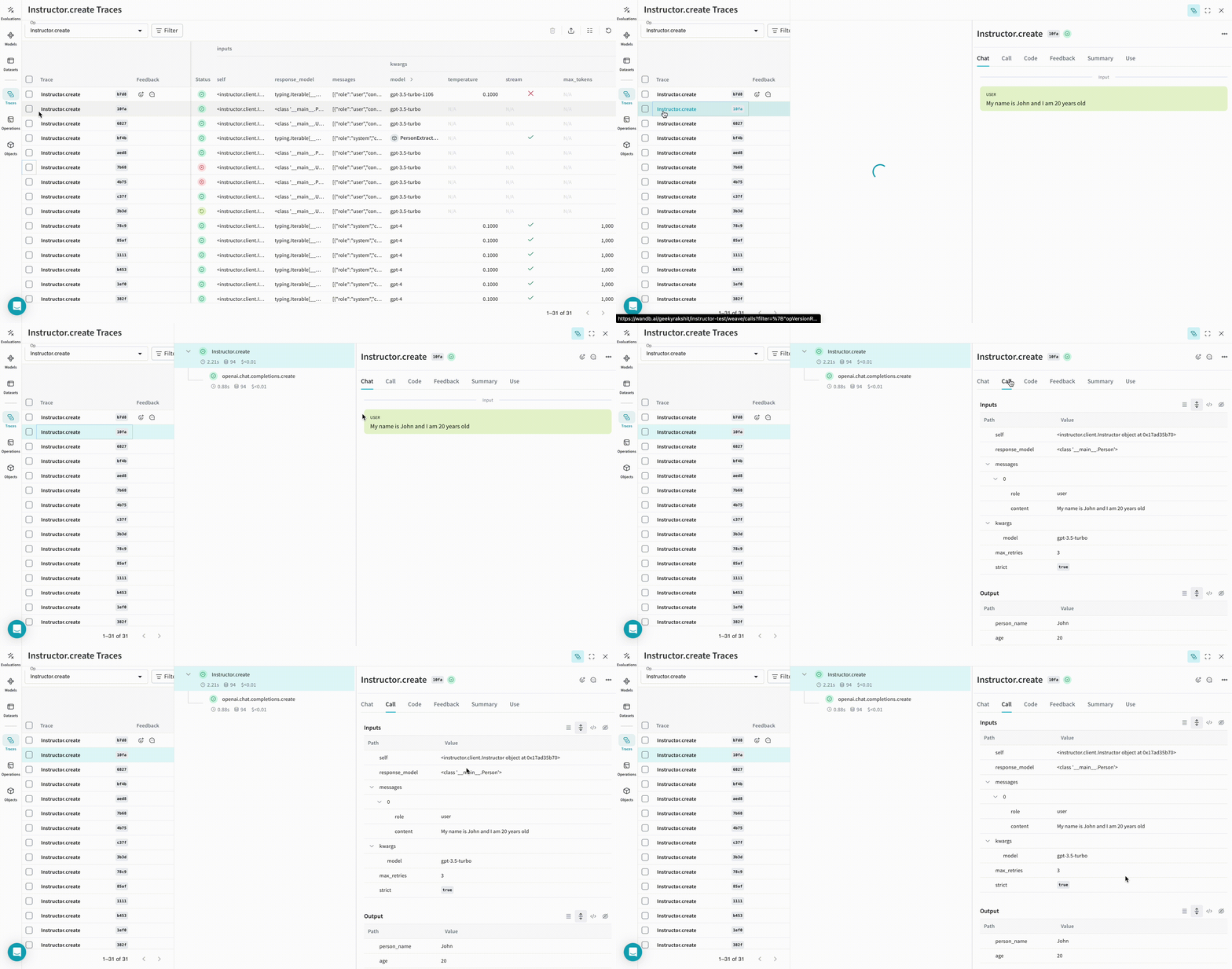
구조화된 출력 추출 워크플로가 포함된 Weave의 Instructor LM 트레이스
이제 Weave가 Instructor를 사용해 이루어지는 모든 LLM calls을 추적하고 로깅합니다. Weave 웹 인터페이스에서 해당 트레이스를 확인할 수 있습니다.

직접 만든 ops 추적하기

함수를 @weave.op로 감싸면 입력, 출력, 앱 로직 캡처가 시작되어 앱에서 데이터가 어떻게 흐르는지 디버그할 수 있습니다. ops를 깊게 중첩해 추적하려는 함수들의 트리를 구성할 수 있습니다. 또한 실험하는 동안 코드 버전 관리도 자동으로 시작되어 git에 커밋되지 않은 임시 세부 정보까지 캡처할 수 있습니다. @weave.op으로 데코레이트된 함수를 만들기만 하면 됩니다. 아래 예시에는 extract_person 함수가 있으며, 이 함수는 @weave.op로 감싼 metric 함수입니다. 이를 통해 OpenAI chat completion call과 같은 중간 step를 확인할 수 있습니다.
import instructor
import weave
from openai import OpenAI
from pydantic import BaseModel


# 원하는 출력 구조 정의
class Person(BaseModel):
    person_name: str
    age: int


# Weave 초기화
weave.init(project_name="instructor-test")

# OpenAI 클라이언트 패치
lm_client = instructor.from_openai(OpenAI())


# 자연어에서 구조화된 데이터 추출
@weave.op()
def extract_person(text: str) -> Person:
    return lm_client.chat.completions.create(
        model="gpt-3.5-turbo",
        messages=[
            {"role": "user", "content": text},
        ],
        response_model=Person,
    )


person = extract_person("My name is John and I am 20 years old")
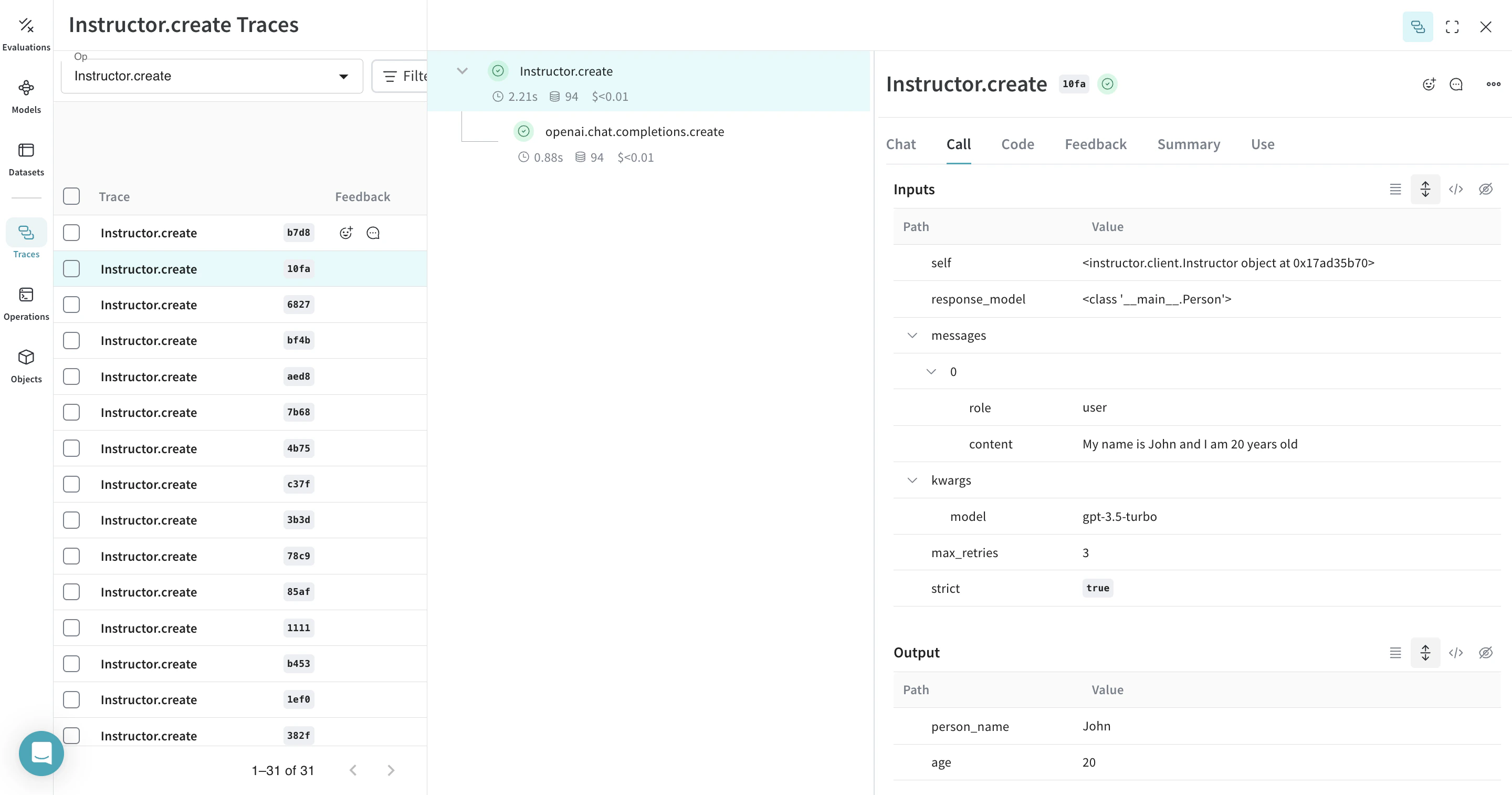
구조화된 객체, 함수 inputs, outputs, 그리고 Pydantic 모델 검증이 포함된 Instructor op 트레이스
extract_person 함수에 @weave.op 데코레이터를 적용하면 함수의 inputs, outputs와 함수 내부에서 발생하는 모든 LM calls이 트레이스됩니다. Weave는 또한 Instructor가 생성한 구조화된 객체를 자동으로 추적하고 버전 관리합니다.

더 쉽게 실험할 수 있도록 Model 만들기

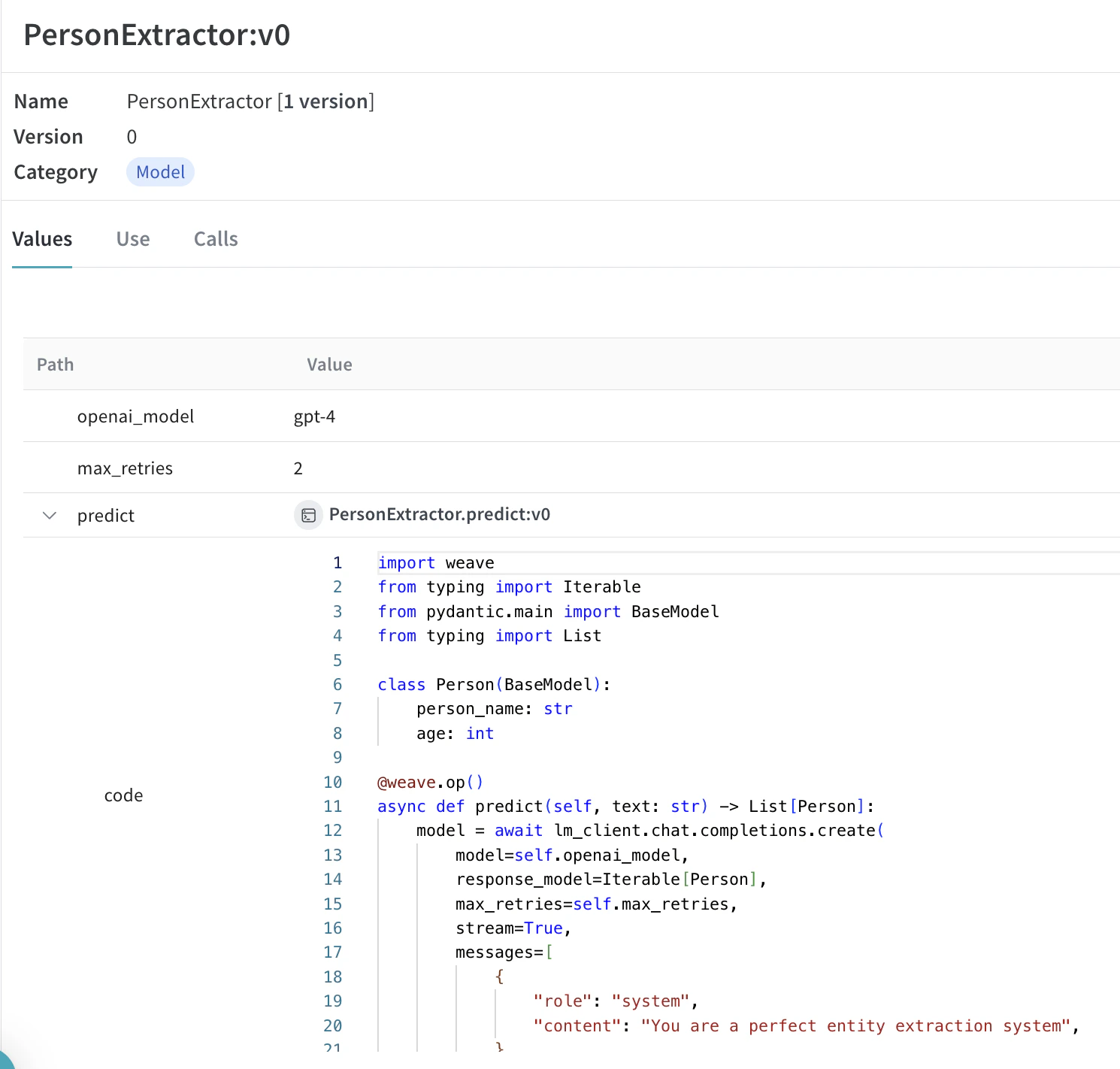
구성 요소가 많아질수록 실험을 체계적으로 정리하기가 어렵습니다. Model 클래스를 사용하면 시스템 프롬프트나 사용 중인 모델처럼 앱 실험의 세부 정보를 캡처하고 정리할 수 있습니다. 이렇게 하면 앱의 여러 버전을 정리하고 비교하는 데 도움이 됩니다. 코드를 버전 관리하고 입력/출력을 캡처하는 것에 더해, Model은 애플리케이션의 동작을 제어하는 구조화된 파라미터도 캡처하므로 어떤 파라미터가 가장 잘 작동하는지 쉽게 파악할 수 있습니다. Weave Model은 serve(아래 참조) 및 Evaluation과 함께 사용할 수도 있습니다. 아래 예제에서는 PersonExtractor를 실험해 볼 수 있습니다. 이 항목 중 하나를 변경할 때마다 PersonExtractor의 새로운 version이 생성됩니다.
import asyncio
from typing import List, Iterable

import instructor
import weave
from openai import AsyncOpenAI
from pydantic import BaseModel


# 원하는 출력 구조 정의
class Person(BaseModel):
    person_name: str
    age: int


# Weave 초기화
weave.init(project_name="instructor-test")

# OpenAI 클라이언트 패치
lm_client = instructor.from_openai(AsyncOpenAI())


class PersonExtractor(weave.Model):
    openai_model: str
    max_retries: int

    @weave.op()
    async def predict(self, text: str) -> List[Person]:
        model = await lm_client.chat.completions.create(
            model=self.openai_model,
            response_model=Iterable[Person],
            max_retries=self.max_retries,
            stream=True,
            messages=[
                {
                    "role": "system",
                    "content": "You are a perfect entity extraction system",
                },
                {
                    "role": "user",
                    "content": f"Extract `{text}`",
                },
            ],
        )
        return [m async for m in model]


model = PersonExtractor(openai_model="gpt-4", max_retries=2)
asyncio.run(model.predict("John is 30 years old"))
모델 버전 및 트레이스 이력이 있는 Instructor Weave Model 트레이싱 및 버전 관리 인터페이스
Model을 사용해 call을 트레이싱하고 버전 관리하기

Weave Model 서빙

weave.Model 객체를 가리키는 weave 레퍼런스가 있으면 FastAPI 서버를 실행하고 serve할 수 있습니다.
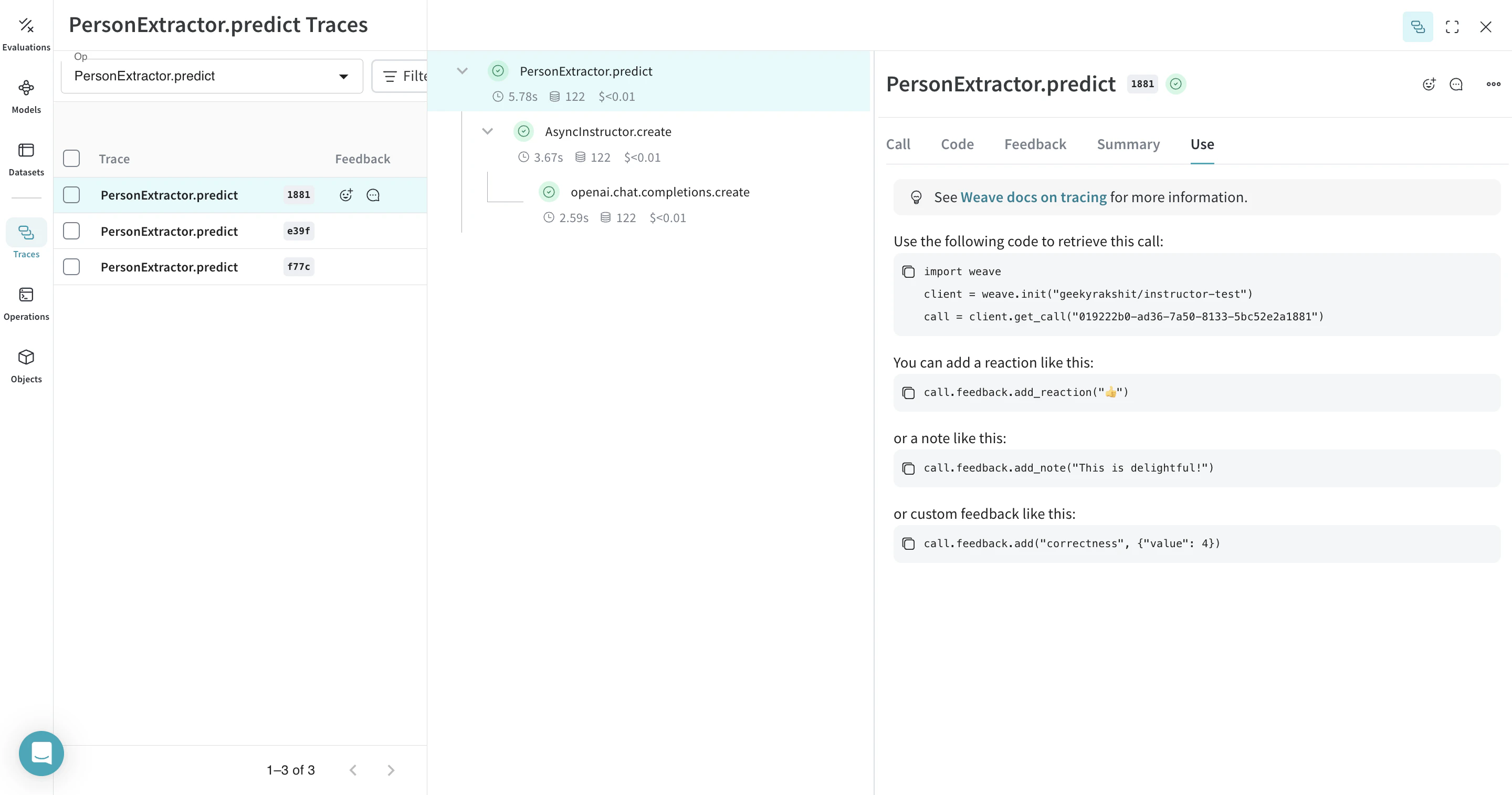
FastAPI 서버 설정 및 모델 서빙 옵션이 포함된 Instructor 서빙 인터페이스
모델로 이동한 뒤 UI에서 복사하면 모든 weave.Model의 weave 레퍼런스를 찾을 수 있습니다.
터미널에서 다음 명령어를 사용해 모델을 서빙할 수 있습니다:
weave serve weave://your_entity/project-name/YourModel:<hash>